

Over a year since the fall of the Assad regime, a powerful new chapter of community-led resilience is emerging across Syria. Women are now stepping into frontline emergency roles once dominated by men, transforming how communities prepare for and respond to crises.
Since 2014, the Aga Khan Foundation’s (AKF) Community Emergency Response Teams (CERTs) have grown from a small volunteer initiative into a nationwide network of trained responders supporting communities during emergencies, disasters and local crises. What began as just two teams in Salamieh has expanded into 20 active teams across four governorates, with plans to reach 26 teams and more than 500 volunteers by the end of 2026.
Today, women represent half of all CERT volunteers. Their increasing leadership reflects a wider shift in how Syrian communities are rebuilding trust, capacity and safety amid a fragile recovery.

CERT volunteers – men and women – are trained to respond to a wide range of emergencies, including earthquakes, floods, fires, landslides and conflict-related incidents. Volunteers receive specialist instruction in:
Much of this training has been delivered under the supervision of the Ministry of Emergency and Disaster Management (formerly the White Helmets), Additionally, the training curriculum was managed and conducted by UK Fire & Rescue International trainers and local technical experts. CERT teams work hand-in-hand with municipal authorities who rely on them as trusted local partners.
“Women responders are reshaping what community emergency response looks like in Syria."Hasan Ali Khansa – Preparedness Manager, AKF Syria
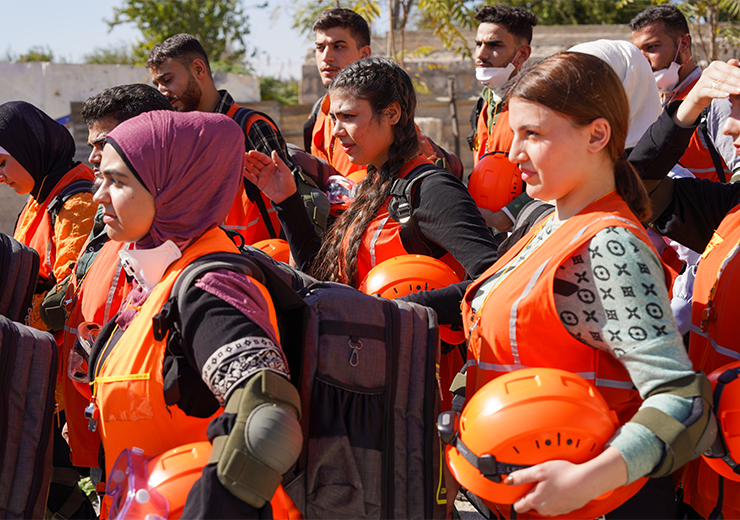
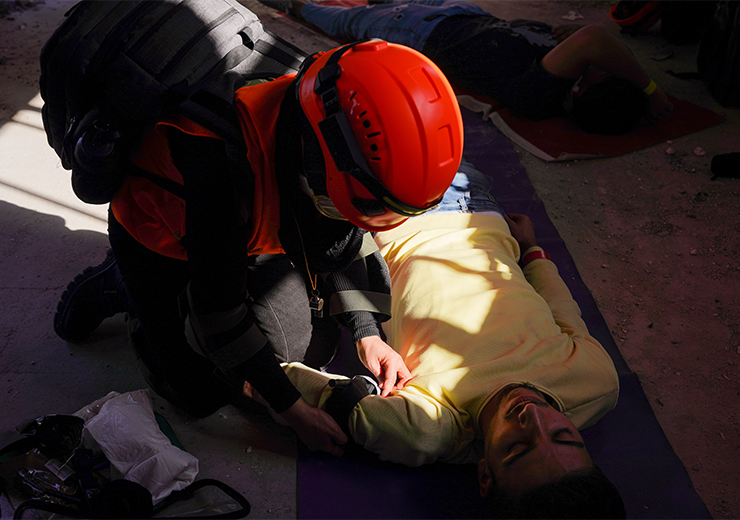
Women responders play critical leadership roles in coordinating rescue efforts, supporting injured families, delivering psychosocial support and serving as essential bridges between responders and affected households. Their presence has increased community trust in emergency teams, particularly among women, children and elderly residents.
“Women responders are reshaping what community emergency response looks like in Syria,” says Hasan Ali Khansa, Preparedness Manager at AKF in Syria. “Their presence ensures that life-saving support reaches everyone, including women and girls who may only feel comfortable receiving help from another woman. This is a big shift in women’s participation on the emergency frontline within their communities.”
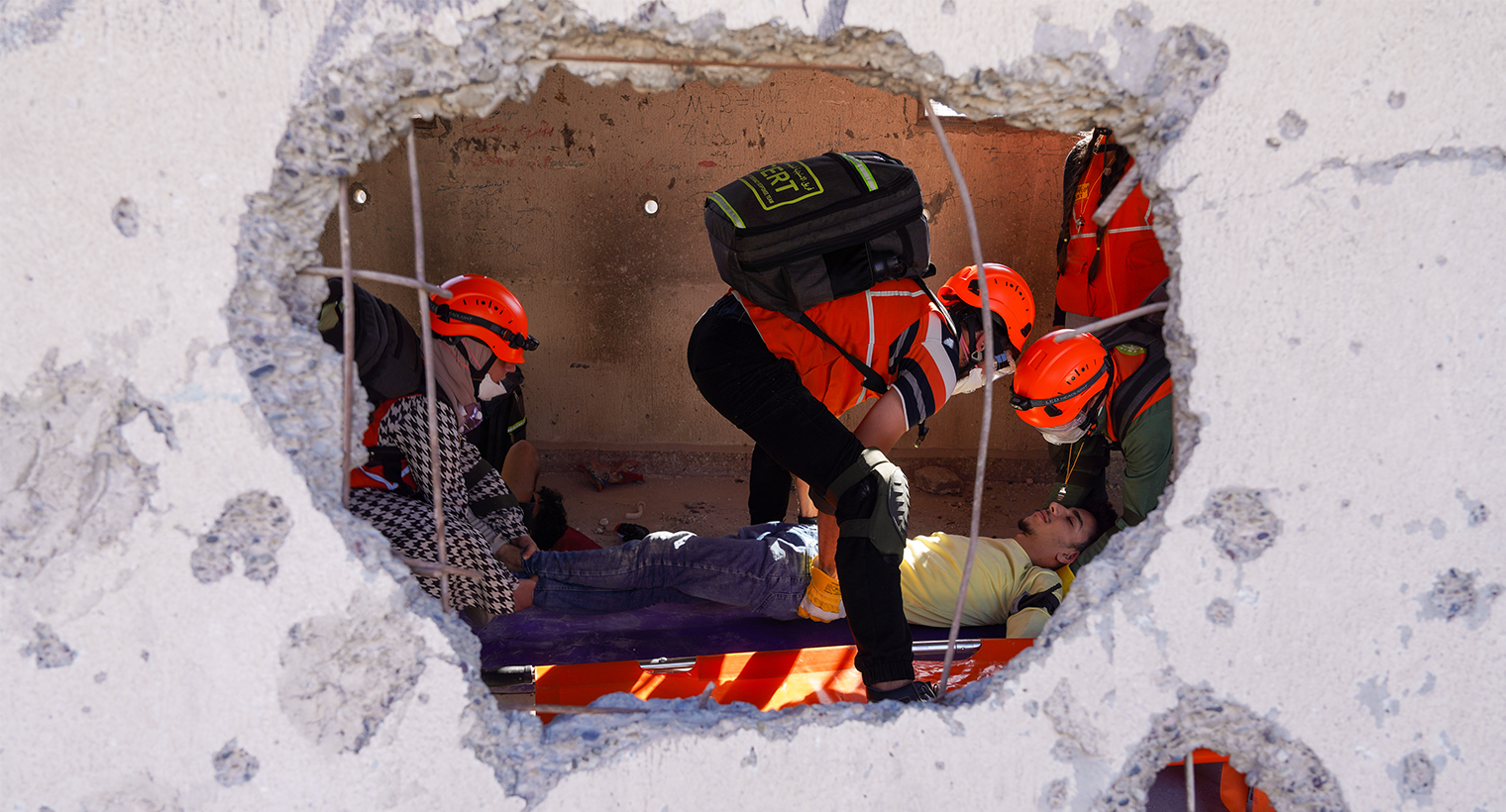
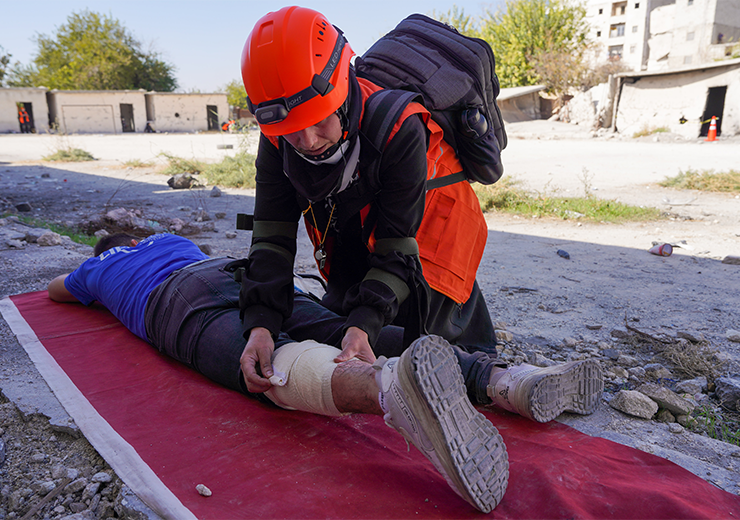
In drills that mirror the pressure of an actual incident, trainees perform rapid primary assessments. These steps – catastrophic haemorrhage, checking airways, breathing and circulation, can stabilise a casualty before medical teams arrive | Photo: Karam Al-Masri / AKF
In many towns, women responders are redefining what leadership looks like.
For Fardous Shahin, an experienced CERT volunteer in Aleppo, the work became real during what was meant to be a routine training exercise.
“During a field training, someone suddenly lost consciousness,” she says. “I used my assessment skills and kept him stable until the medical team arrived. That’s when I realised the training isn’t theoretical, it’s literally about saving lives.”
That moment shaped how she responds under pressure.
“When you’re first on the scene, there’s no time for fear at all,” Fardous explains. “The tension turns into focus because time means life or death.”

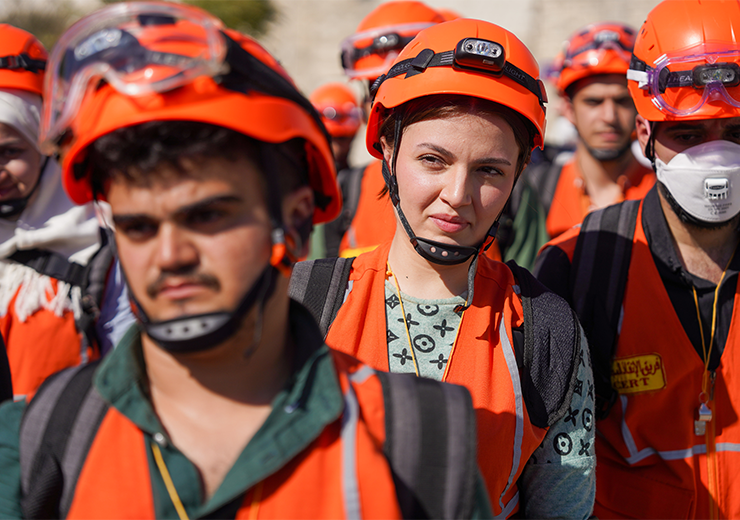
Fardous also reflected on the unique strengths women bring to CERT teams, qualities that have shifted both the work and society’s perception of who belongs on the front line.
“Some people still think this work is too difficult for women,” she says. “But we’ve proven in reality that we have the same competence, and sometimes we’re even calmer and more organised in difficult situations.”
And in many emergencies, women responders are not just valuable, they’re essential.
“There are situations where a woman will only accept help from another woman. That’s why it’s so important for us to be responders too.”
“When you’re first on the scene, there’s no time for fear at all. The tension turns into focus because time means life or death.”Fardous – CERT volunteer
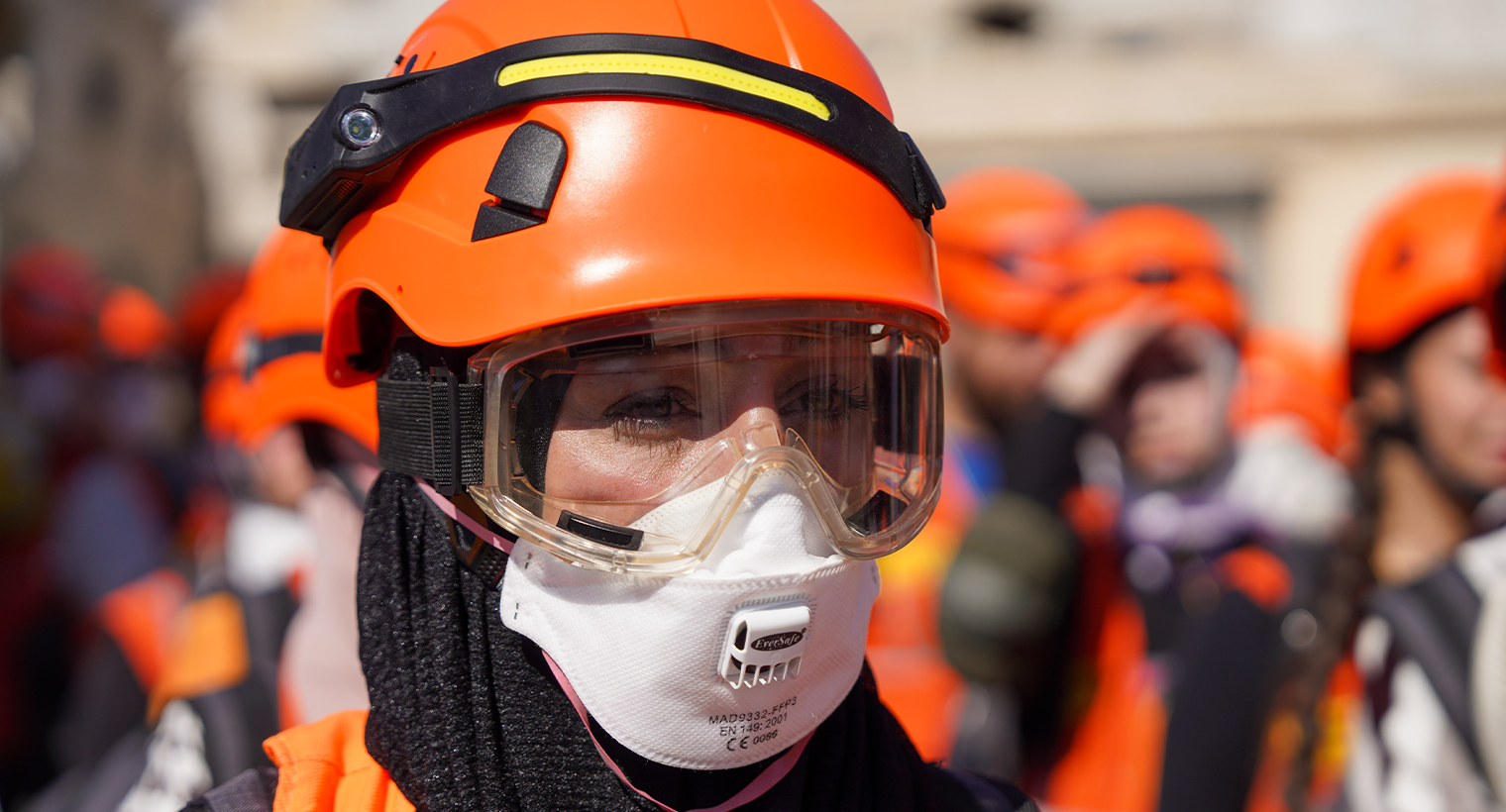
Protective Personal Equipment is used during simulations of fires, dust exposure, and hazardous environments – conditions CERT volunteers frequently face during real emergencies | Photo: Karam Al-Masri / AKF
With 16.7 million people in need of humanitarian assistance and 7.2 million internally displaced across Syria (UNOCHA), local responders remain a critical pillar of community resilience.
The CERT model provides:
This year, AKF signed a new Memorandum of Understanding with Syria’s Ministry of Emergency and Disaster Management, formally recognising the CERT model and reinforcing national-level support for community-led response.

The agreement strengthens coordination between CERT volunteers and government responders, ensuring that local knowledge and rapid mobilisation are integrated into emergency plans across Syria. It also clears the way for expansion into additional municipalities.
With international attention fluctuating, the growth of CERTs offers a story of progress rooted in local leadership by all members of Syrian society, both women and men.
Photos by Karam Al-Masri


Support our work Your donations are helping us build a future where we all thrive together.