
With humanitarian support from the European Union, the Aga Khan Foundation and the Aga Khan Agency for Habitat are climate-proofing water systems across Afghanistan’s highlands – cutting disease, easing women’s workloads and empowering local committees to keep water flowing year-round

With an estimated 21 million people across Afghanistan lacking access to enough water for drinking, cooking and hygiene – and with fragile infrastructure increasingly strained by population pressures and a changing climate – the country faces a mounting crisis that threatens to deepen humanitarian needs and erode already-precarious livelihoods.
For remote mountain communities in the northern mountainous regions of Wakhan in Badakhshan and parts of Bamyan, where long walks to contaminated water sources have long shaped daily life, the challenge is especially acute.
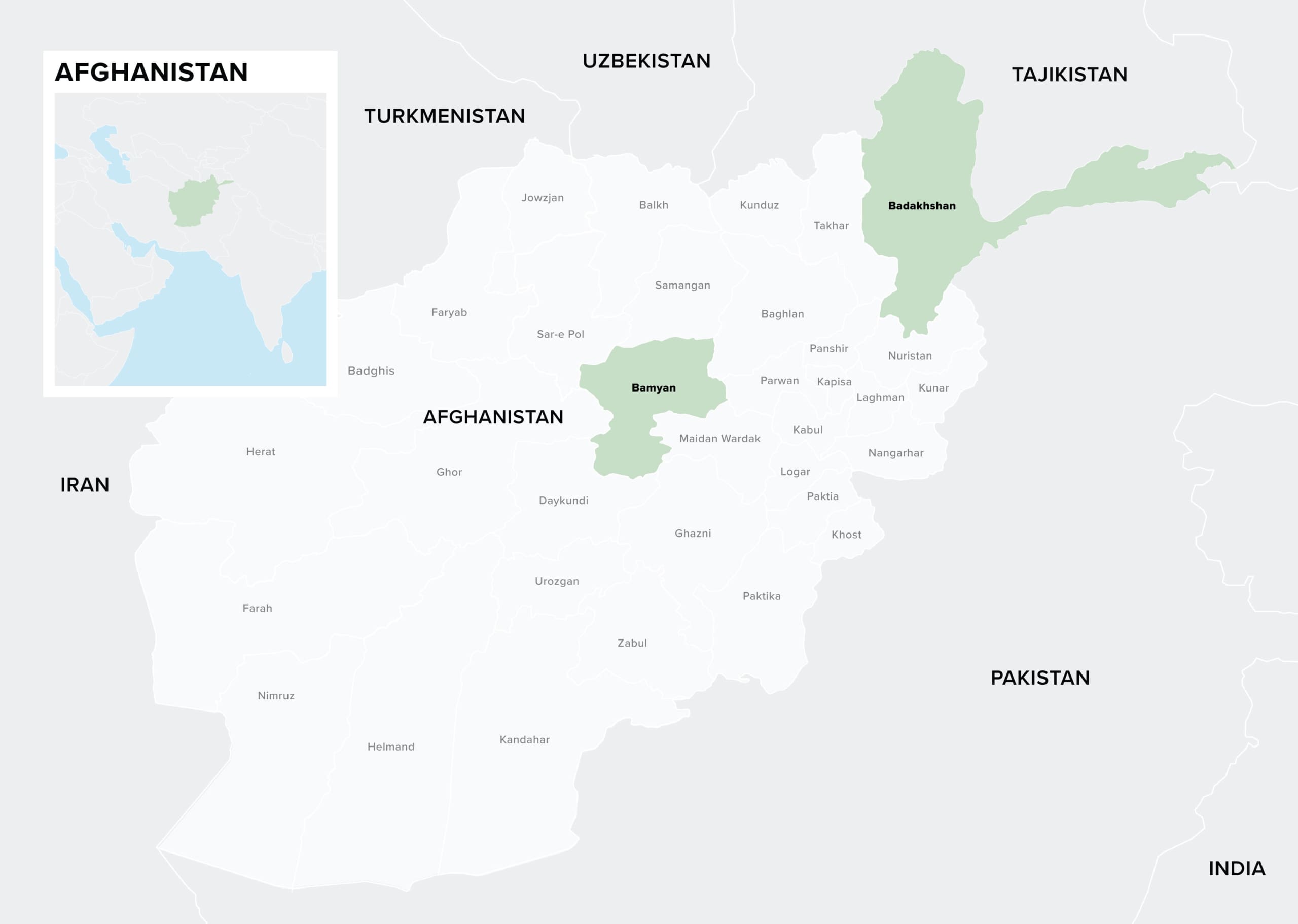
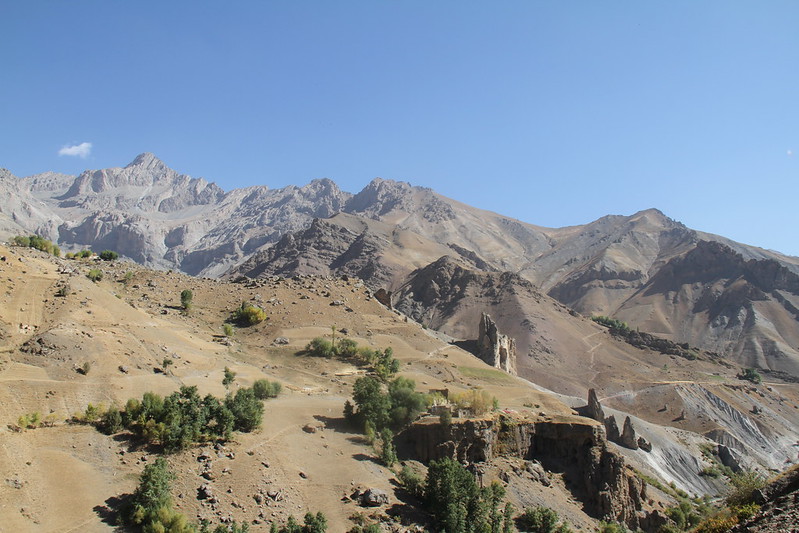
For remote mountain communities in the northern mountainous regions of Wakhan in Badakhshan and parts of Bamyan, the challenge of accessing water is especially acute. | Illustration: Soimadou Ibrahim
“Access to water in the country’s high-altitude and mountainous regions is challenging due to harsh winters, scattered settlements, seasonal shortages, and weak infrastructure,” explains Karimdad Muradi, Head of Operations at the Aga Khan Agency for Habitat (AKAH) in Afghanistan.
“Communities are often located on steep slopes far above springs or rivers,” continues Muradi, which, he says, makes gravity-fed systems unfeasible and requires costly mechanical pumping. “Water sources are also highly seasonal, with springs flowing in summer but diminishing, or drying up, in winter.”
According to UNICEF, two thirds of the country’s population are affected by drought; with families having to leave their homes by the tens of thousands in search of clean water. On top of this, following recent earthquakes in Afghanistan, over 200, 000 children are now at risk of deadly disease outbreaks due to the widespread destruction of water, sanitation and hygiene infrastructure.

Within disaffected communities, however, a coordinated effort is underway to bring clean, reliable water closer to home and to significantly reduce waterborne diseases and improve women and children’s safety.
Through a comprehensive water, sanitation and hygiene (WaSH) programme – implemented by the Aga Khan Foundation (AKF) in partnership with AKAH, and with funding from the European Union – vulnerable households are better able to access to safe water and sanitation facilities, as well as gaining greater awareness of hygiene practices that reduce the risk of disease.
The initiative aims to reach more than 75,000 people by rehabilitating 82 water points, restoring 19 wells and upgrading 63 solar-powered and gravity-fed water supply schemes so that communities can depend on them throughout the year.
“Water systems cannot survive without active local participation”Karimdad Muradi, Head of Operations at AKAH in Afghanistan
To achieve this, a combination of climate-resilient, low-maintenance technologies are tailored to harsh environments. Gravity-fed pipe schemes, Muradi explains, “tap high-elevation springs and deliver water to villages without the need for electricity”, and pipes are buried “below the frost line to prevent freezing”.
Long-term sustainability is central to the approach. Regular water quality testing and treatment ensure that systems remain safe, while WaSH committees and community health promoters are being established in each village. These groups and individuals oversee daily operations, collect modest fees for maintenance, monitor tap stands and reservoirs, resolve disputes and lead local hygiene awareness campaigns.
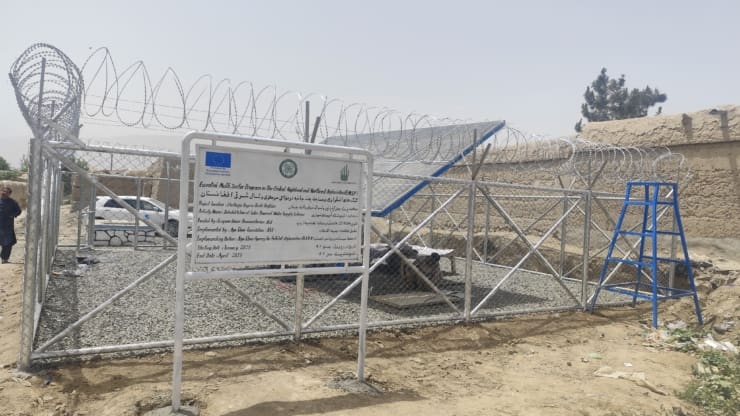
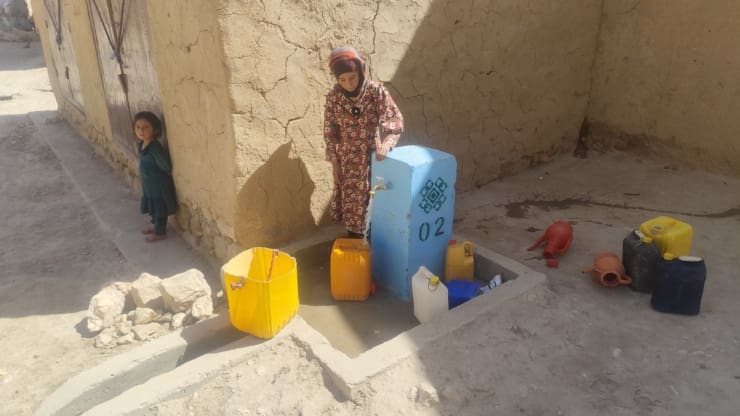
“Community involvement is crucial in remote areas of Afghanistan,” Muradi emphasises. “Water systems cannot survive without active local participation”.
Here efforts see communities engaging in programme planning through identifying top water sources, proposing locations for reservoirs, and assessing seasonal challenges.
At a household level, unskilled labour is volunteered, alongside the donation of stones, gravel or transport, which reduces costs and fosters a sense of ownership. Women – who rely on clean water for child-care, laundry and latrine washing – are especially integral to the initiative’s success.
"We are committed to maintaining this system to ensure it benefits our village for future generations”Khairuddin, a farmer from the Badakhshan province of Afghanistan
Targeted hygiene promotion sessions, coupled with the distribution of 6,000 hygiene kits, are helping families adopt practices that protect children and vulnerable adults from water-borne illnesses. This strong sense of responsibility, Muradi notes, is “a key reason rural water systems remain functional in Afghanistan’s difficult environments.”
So, what happens when clean water is finally within reach? For many of Afghanistan’s remote communities, easy access to sufficient water brings immediate change: fewer illnesses, less time spent collecting water, more opportunities for education and livelihood activities, and greater dignity in daily life. For Khairuddin, a sixty-year-old farmer supporting a family of nine from the village of Sar Shekhawr in the Badakhshan province of Afghanistan, the initiative has been transformational.

“The project has highlighted the strength and resilience of our community and restores our dignity by providing clean water,” he says. “And we are committed to maintaining this system to ensure it benefits our village for future generations.”
By pairing infrastructure improvements with community-led management and hygiene awareness, this programme is laying the groundwork for a healthier, more resilient Afghanistan – demonstrating that, especially in the most remote places, access to safe water is akin to a future reimagined.
This programme was made possible with support from the European Union.





Support our work Your donations are helping us build a future where we all thrive together.