

Agriculture & Food Security
Afghanistan is facing one of the most severe humanitarian crises in decades. Nearly 28.3 million people – over 65% of the population – require help to meet basic needs like food, water and education. In the country’s remote northeastern and central highlands, communities live in mountainous areas where access is especially limited.
Drawing on decades of experience and longstanding, close-knit relationships with these communities, the Aga Khan Foundation (AKF) and the Aga Khan Agency for Habitat (AKAH) are providing essential humanitarian aid to some of Afghanistan’s most isolated villages in Badakhshan, Baghlan, Bamyan, Daikundi, Samangan and Takhar.

With funding from the European Union, over 145,000 people are receiving life-saving support, including food, clean water, education and disaster preparedness. A particular focus of the programme is ensuring the needs of women, girls and other vulnerable groups are met.
For families like Mohammad Sarwar’s, a 65-year-old man from Afghanistan’s Bamyan province and who supports a family of eight, the aid is transformative.
“Receiving this cash assistance gave me hope again”Mohammad Sarwar, from Afghanistan's Bamyan province.
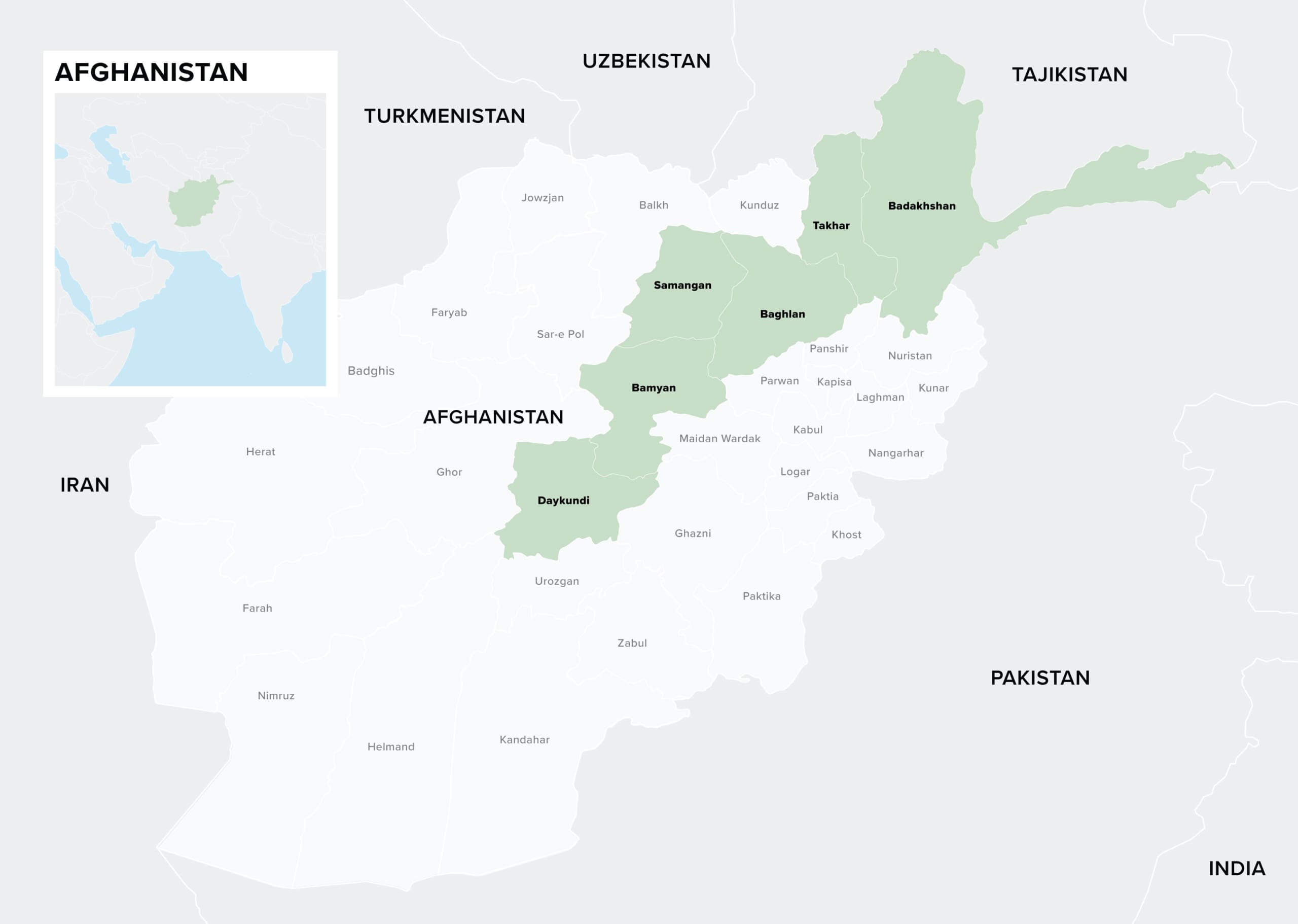
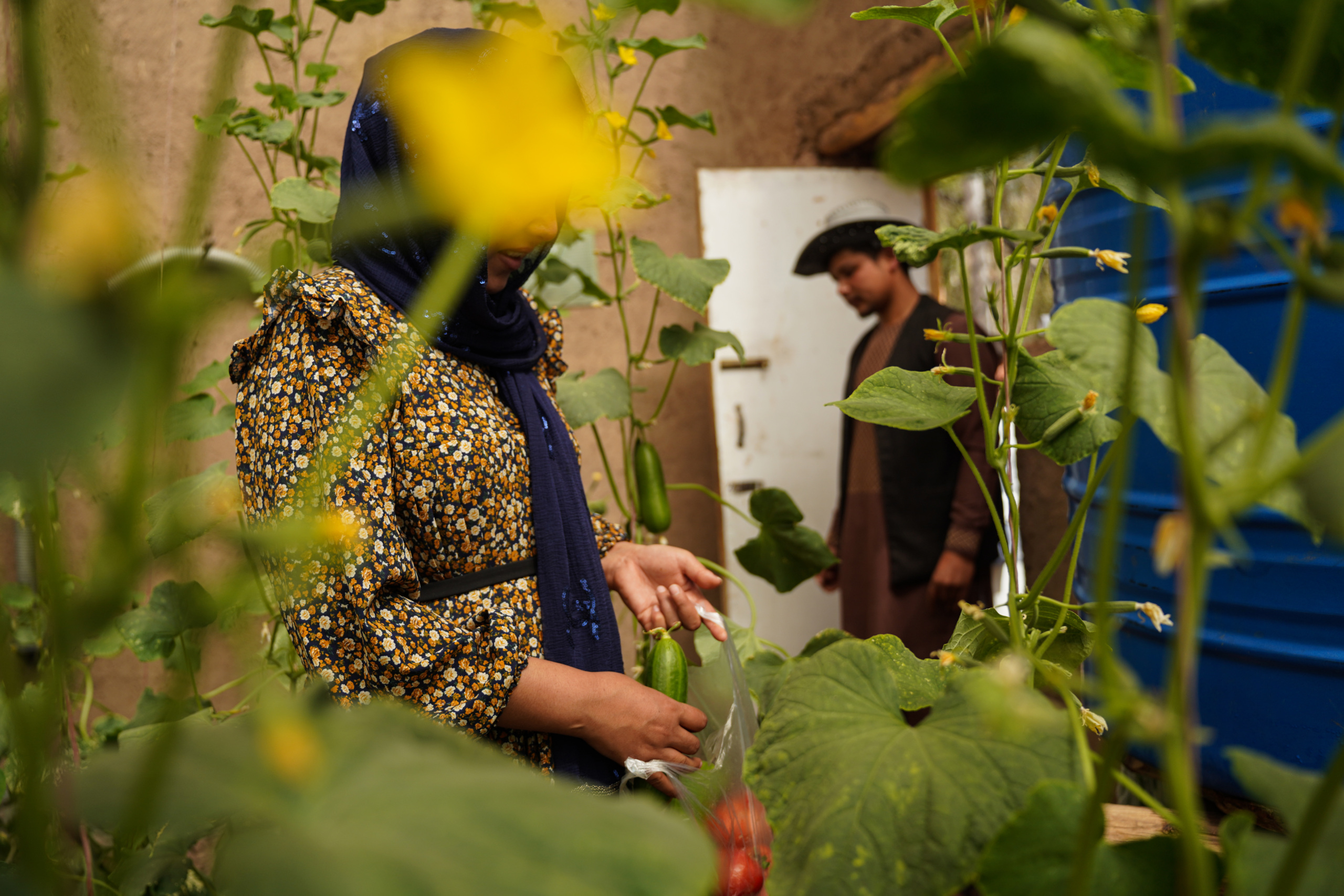
The initiative is providing essential humanitarian aid to some of Afghanistan’s most isolated villages in Badakhshan, Baghlan, Bamyan, Daikundi, Samangan, and Takhar. | Illustration: Soimadou Ibrahim
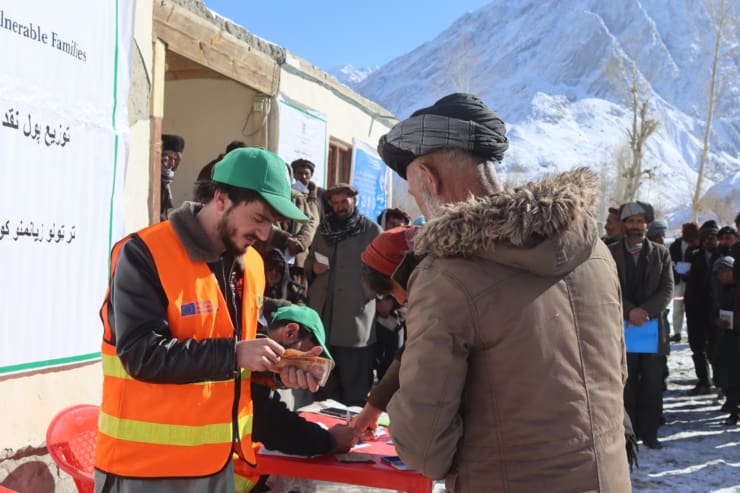
After their home was destroyed by fire in 2024, and with Sarwar’s disability limiting income opportunities, the family faced hardship. Yet having since received support to purchase food and supplies for up to three months, not only were Sarwar’s urgent food needs met and a sense of stability provided for his family, but the experience also restored dignity to his and other vulnerable families.
“Receiving this cash assistance gave me hope again,” reflects Sarwar, “and it helped me during the past winter.”
Through this programme, over 10,780 households benefit from a combination of food and cash-based support, helping families ride out lean seasons without being forced to resort to harmful coping strategies.

Agro-pastoralist households, whose livelihoods depend on livestock, too, face particular challenges. With between 80-85% of the Afghan population relying on the yields of essential crops and the production of milk, meat and eggs by livestock – and where, according to a World Bank report, farming accounts for almost a quarter of Afghanistan’s GDP – investment in agro-pastoralist families is critical.
“Supporting agro-pastoralists is vital to protect livestock health and ensure community resilience,” asserts Alimuddin Naseri, AKF’s Livestock Development Programme Manager in Afghanistan, “as their livelihoods depend on animal husbandry, which has a significant impact on the national economy”.
Yet drought, disease, and harsh winters threaten the health of animals. Prior to launching the EU-supported interventions, teams at AKF conducted group discussions to identify community needs. “[We found that] animal health, feeding and agricultural support were immediate priorities,” says Naseri.

The data collected also indicated that vulnerable households, particularly those unable to feed their animals during winter, needed critical support. “Many of these households,” continues Naseri, “lacked access to necessary animal health services due to financial constraints”.
To combat this, livestock development centres, managed by veterinarians in target districts, and livestock development field units, run by para-veterinarians servicing several villages far from district centres, have been established.
“Supporting agro-pastoralists is vital to protect livestock health and ensure community resilience”Alimuddin Naseri, AKF’s Livestock Development Programme Manager in Afghanistan
Through these community-based veterinary services, which provide animal health services, breeding, feeding and extension services, and through the distribution of high-quality fodder and the training of local animal health workers, 8,400 farmers are now able to protect their livestock and in turn strengthen community resilience.
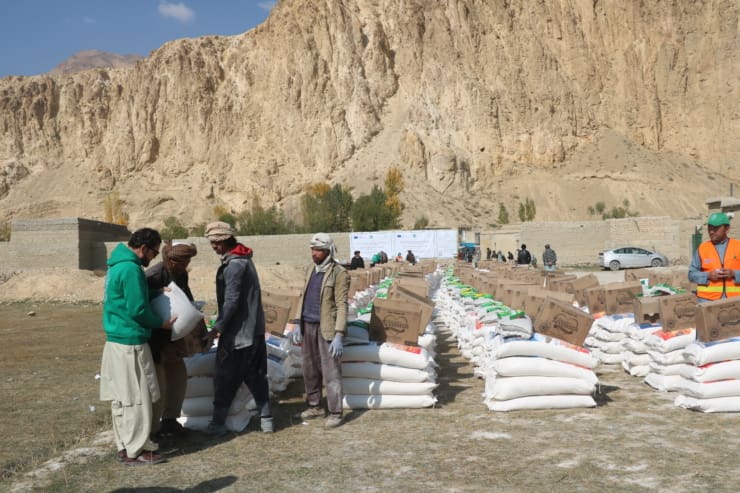
Ghulam Hussain, a farmer from Qash-Malek-Tarek village reflects on the impact the intervention has had on his work: “Before the vaccinations, the mortality rate of animals was really high and almost 30-35% of animals would die.”
Having undergone two rounds of vaccinations as part of the initiative, Hussain says there are now fewer mortalities. “It was very beneficial.”

By integrating food security, cash and in-kind assistance, livestock support and disaster preparedness within a trusted, community-focused approach, this initiative demonstrates that longterm investment and participatory processes can save lives, strengthen resilience and nurture hope for tomorrow.
This programme was made possible with support from the European Union.





Support our work Your donations are helping us build a future where we all thrive together.