
The parallel events explored how aligning coastal restoration with economic opportunity can support long-term ocean recovery and community resilience

Last week, the Aga Khan Foundation (AKF), in partnership with Conservation International, convened leaders from across government, philanthropy, finance and civil society at two parallel events in Kenya and the UK. Together, we explored how sustainable livelihoods, investment and ecosystem restoration can work in tandem to drive ocean recovery and build community resilience.
Held alongside the Our Ocean Conference in Mombasa and London Climate Action Week, the events shared the title Blue Economy, Real Economy: A Sustainable Future for People & Planet.
At the Our Ocean Conference side event in Mombasa, held on 18 June, a panel discussion reframed ocean recovery as an economic design challenge. The event brought together leaders working at the intersection of conservation, livelihoods and policy.
Speakers included Benson Kirathe, Assistant Director of Fisheries at Kenya’s State Department of Blue Economy and Fisheries; Susan Otieno, CEO of AKF Kenya; Seif Hamisi, Managing Director East Africa and Country Director Kenya at Conservation International; and Bosco Juma, Co-Founder and Executive Director of Big Ship, a community-led organisation based in Mombasa.

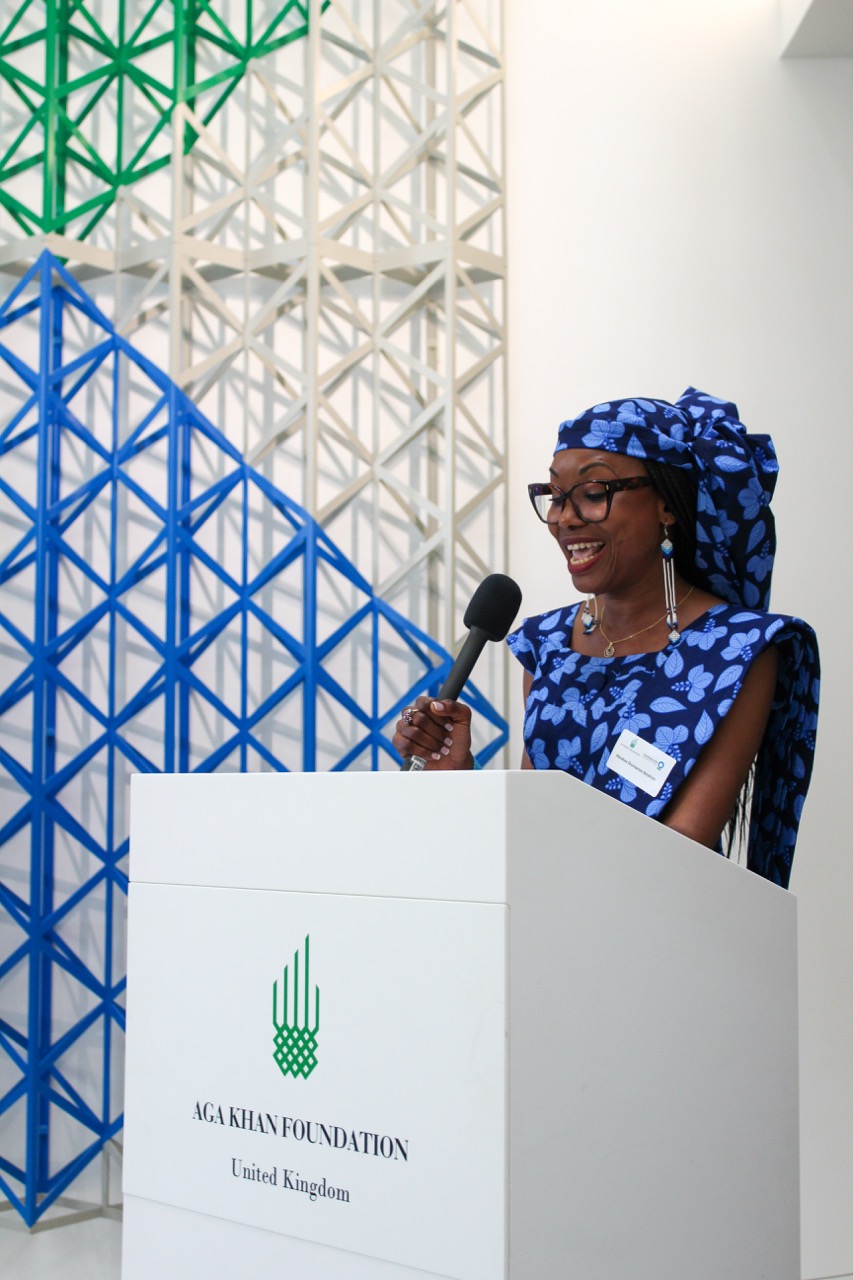
CEO of AKF Kenya, Susan Otieno, during her opening remarks.
Photo: Christopher Wilton-Steer / AKF

The panellists, spanning government, NGOs and community organisations, discussed the win-win approach of coastal recovery and economic opportunity.
Photo: Christopher Wilton-Steer / AKF

The panellists shake hands with Amin Mawji OBE, Diplomatic Representative of AKDN in East Africa.
Photo: Christopher Wilton-Steer / AKF

Dr. Matt Reed, AKF’s Director of Institutional Partnerships, speaks with Bosco Juma, Co-Founder and Executive Director of Big Ship, a long-standing community-based partner of AKF in Mombasa, Kenya.
Photo: Christopher Wilton-Steer / AKF
/4
"The ocean has existed in silence while serving mankind; it is time, as friends of the ocean, to speak for the ocean and represent the ocean where she is absent.”Susan Otieno – CEO, AKF Kenya
Drawing on experience from the Western Indian Ocean, the panel explored a simple proposition: when sustainable fisheries, habitat restoration and community enterprise generate reliable revenues, compliance strengthens, governance improves and ecosystems recover.
As Susan Otieno, CEO of AKF Kenya, noted, “Economic models that put communities’ resilience, leadership and ownership first have the ability for sustainability and life transformation. While we think of economic development, the question to tackle remains conservation and longevity of the ocean. As many stated, the ocean has existed in silence while serving mankind; it is time, as friends of the ocean, to speak for the ocean and represent the ocean where she is absent.”
The session formed part of the Our Ocean Conference, a global platform that brings together governments, organisations and private sector actors to drive commitments and action for ocean conservation. This year’s conference in Mombasa placed a strong focus on implementation, partnerships, and solutions that deliver both environmental and socioeconomic benefits.
On 22 June, AKF and Conservation International hosted a roundtable and reception at the Aga Khan Centre in London. Part of London Climate Action Week, the event brought together philanthropic leaders, impact investors and sustainability experts to explore how to scale coastal resilience solutions.
Now one of the world’s largest independent climate gatherings, London Climate Action Week convenes stakeholders from across sectors to accelerate global climate action and translate commitments into implementation.
The themes of the two-part event were grounded in a shared premise: ocean recovery is not only a conservation challenge, but also an economic one. Despite growing global commitments, degradation continues where economic systems reward short-term extraction over long-term stewardship.
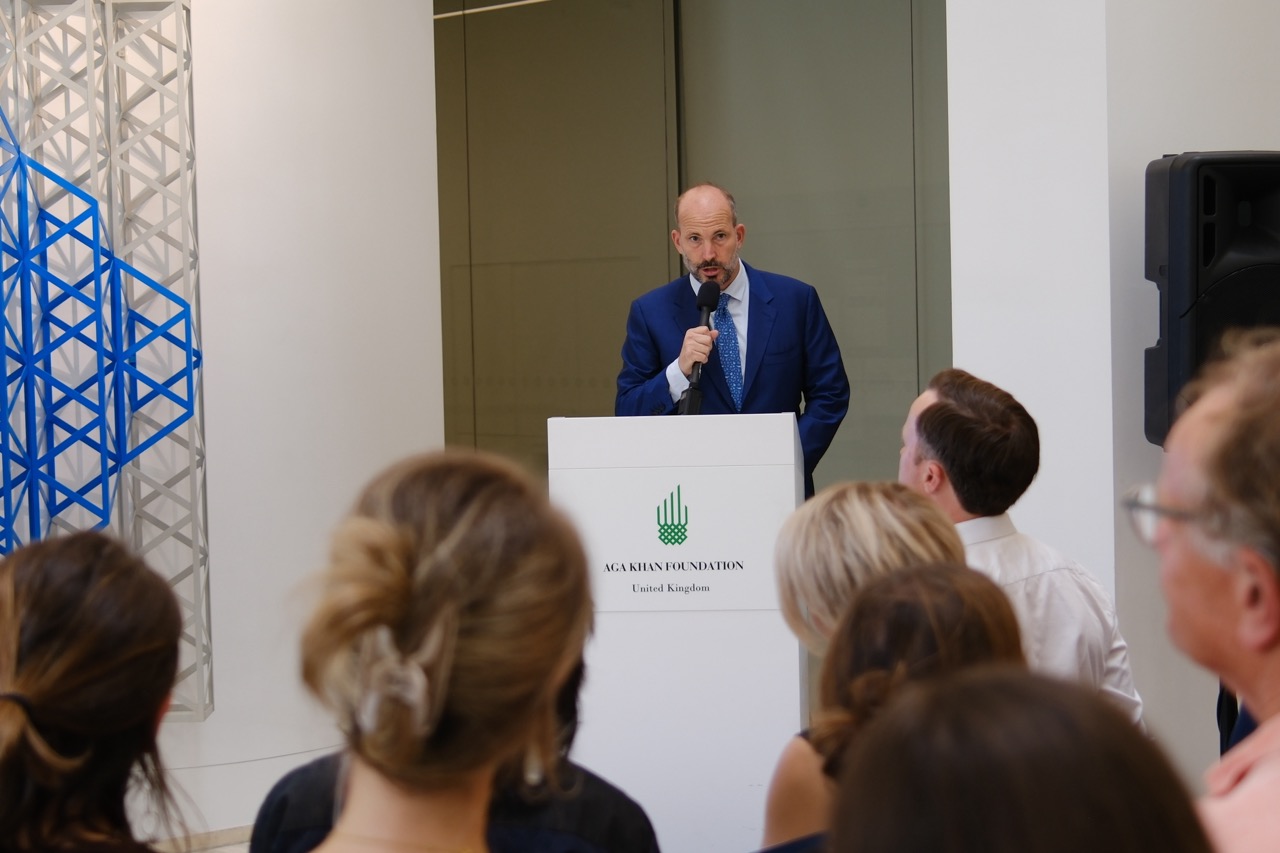
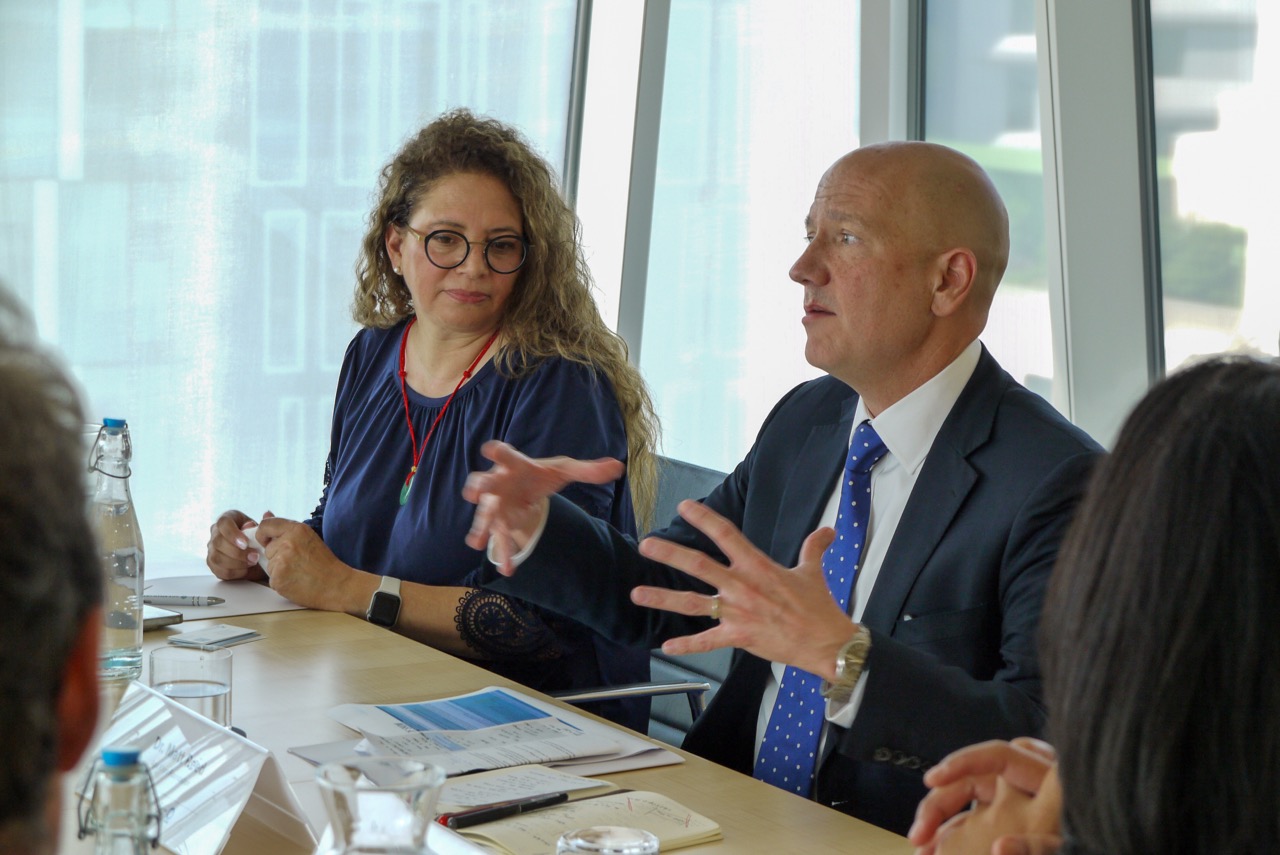
During the roundtable, technical experts, funders and partners – including AKF’s Apoorva Oza, Didier Van Bignoot and Dr. Matt Reed, and Conservational International’s Meizani Irmadhiany and Jana Lessenich – explored the intersection of ocean health, livelihoods and economic incentives. Discussions identified practical opportunities for collaboration, including blended finance models, scaling community-led enterprises and strengthening enabling policy environments.
The following reception brought together almost 100 leaders working across the sector to elevate the conversation, share real-world examples and build relationships to help scale solutions across regions.
As Dr. Sebastian Troëng, CEO of Conservation International, emphasised: “The challenges facing the ocean and coastal communities today are beyond the capacity of any one organisation to solve on their own. We need ambitious partnerships across organisations and sectors to have impact at scale. For this reason, we are excited about our collaboration with AKF to bring in philanthropic, public and private investor partners to deliver impact for nature and people across the Western Indian Ocean.”
Together, AKF and Conservation International highlighted approaches that align environmental outcomes with economic opportunity, demonstrating how sustainable livelihoods can drive lasting ocean recovery.
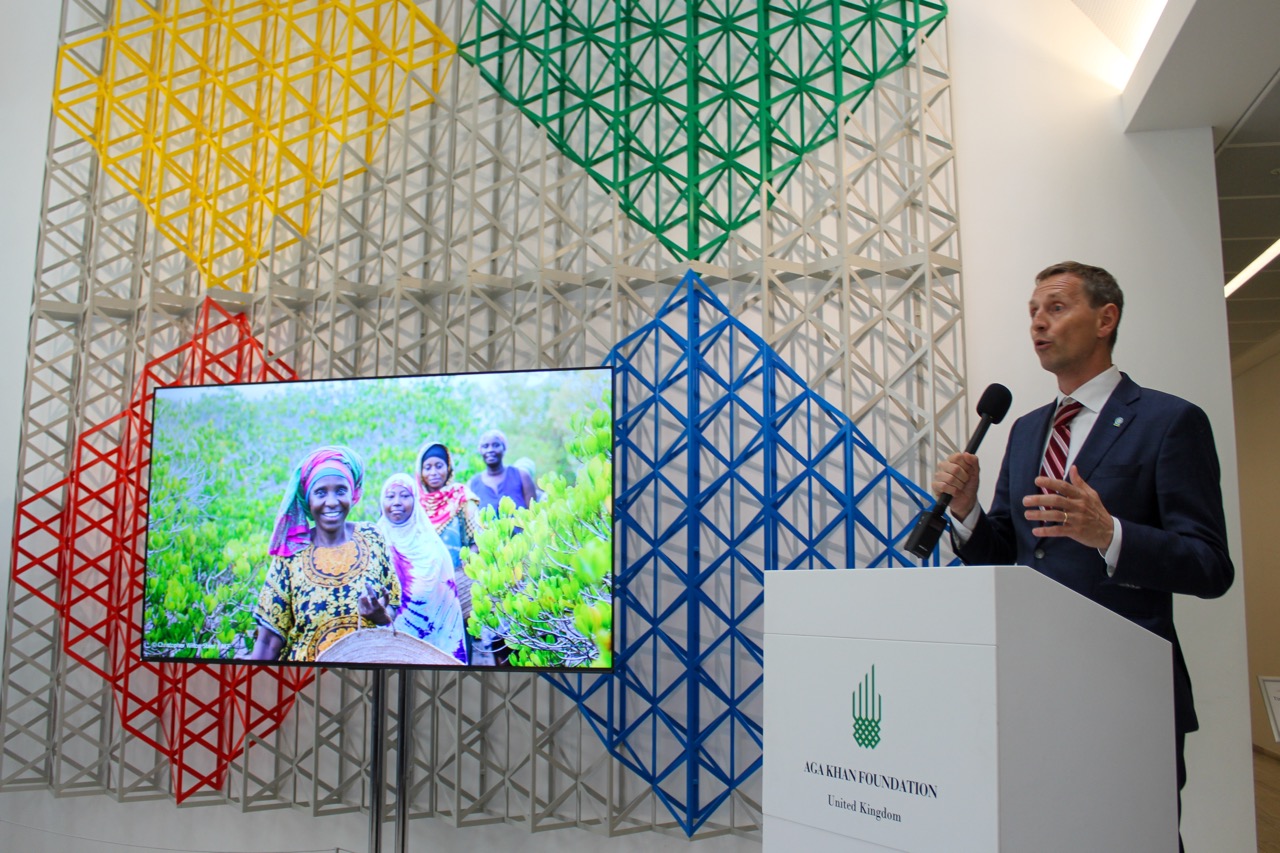
Dr. Sebastian Troëng, Conservation International CEO, addresses the reception at the Aga Khan Centre. | Photo: AKF
Both events build on AKF’s ReGeneration initiative, which supports integrated approaches to coastal development and community resilience across the Indian Ocean region.
Working in partnership with local organisations and communities, ReGeneration focuses on restoring coastal ecosystems, strengthening climate resilience and supporting sustainable livelihoods. The initiative reflects the recognition that effective climate action must combine environmental restoration with inclusive economic development.

Across both events, a consistent message emerged: effective coastal climate action depends on putting communities at the centre and ensuring that environmental solutions are economically viable.
By connecting local experience with global dialogue, AKF and its partners are advancing models that demonstrate how healthy ecosystems and thriving communities go hand in hand – and how, together, they can build a more resilient future for people and oceans alike.


Support our work Your donations are helping us build a future where we all thrive together.